Knowledge Base & Articles
Explore expert tips, material comparisons, structural ideas, and packaging trends to elevate your brand's unboxing experience.
Choosing the right Custom Bakery Packaging Boxes from China involves more than comparing prices. Bakery owners need packaging that protects delicate products, reflects brand quality, and performs reliably during delivery. A rigid cake box, grease-resistant pastry carton, or windowed cookie package can create very different customer experiences.
Experienced buyers usually examine paper thickness, coating quality, printing accuracy, and structural strength. A box may look attractive in a digital proof but feel weak in the hand. That difference matters. Practical testing should include stacking, moisture exposure, oil resistance, and transport simulation. Fresh cream cakes need stronger support than dry biscuits. Small details often prevent expensive product damage.
Reliable Chinese manufacturers can offer flexible dimensions, custom colors, inserts, handles, and finishing options. They may also support recycled paper, water-based inks, and food-contact documentation, depending on the product and destination market. Buyers should request samples before approving mass production. Factory audits, clear specifications, and documented quality checks add useful confidence.
However, customization is not automatically better. Excessive decoration can increase cost, production time, and material use. A gold foil logo may impress customers, yet it may not suit every bakery or budget. Packaging decisions should balance appearance, protection, sustainability, and shipping efficiency. This guide explores practical options, supplier evaluation methods, and common mistakes when sourcing bakery packaging from China. The goal is simple: choose boxes that look professional, protect food properly, and support dependable long-term business growth.
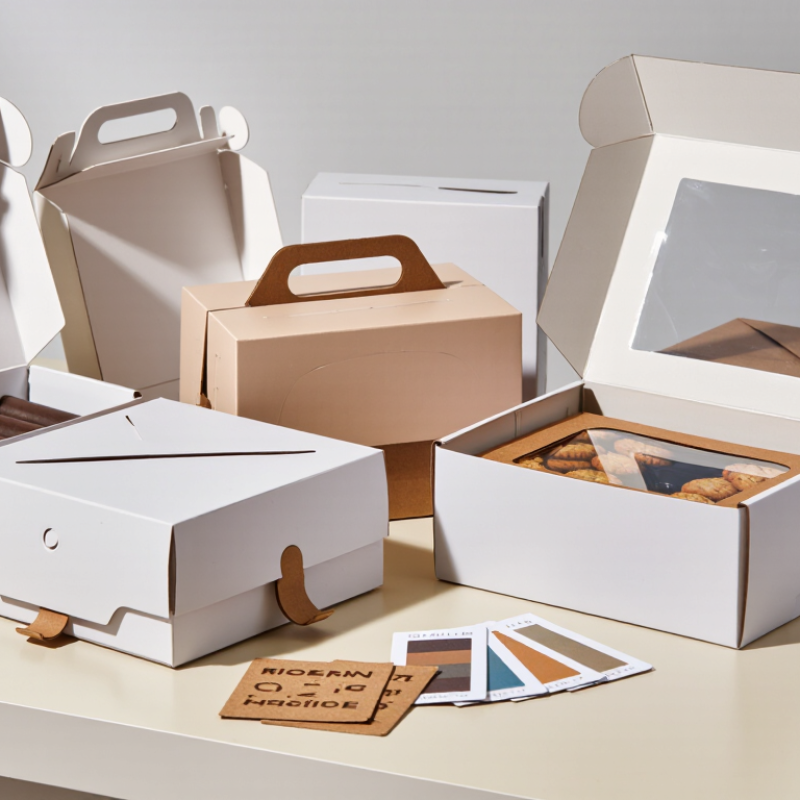
China-made custom bakery packaging boxes come in several practical formats. Folding paperboard cartons suit cookies, brownies, and small pastries. They ship flat and reduce warehouse space. Window boxes display icing clearly, while grease-resistant liners help protect printed surfaces. For cakes, rigid setup boxes offer stronger walls and cleaner presentation. Corrugated mailer boxes work better for subscription orders and longer delivery routes.
Material choice should follow the product, not only the artwork. A soft chiffon cake needs internal support, while dry biscuits need moisture control.
Kraft bakery boxes create a natural appearance, but they can absorb oil without a suitable coating.
According to Smithers’ packaging research, recyclable paper-based formats continue gaining market share as brands respond to sustainability pressure. McKinsey’s 2023 global packaging survey also reported that about 60% of consumers would pay more for sustainable packaging. That preference is useful, but not universal.
Chinese suppliers often provide offset printing, flexographic printing, embossing, and custom die-cutting.
A buyer should request food-contact documentation, ink details, compression tests, and carton samples.
Small details matter: a 2-millimeter fit error can make a cake slide during transport. I learned this the hard way with shallow inserts. Pretty packaging failed. Corrugated mailers need edge-crush testing, especially for humid routes. Some coatings also weaken paper recycling, so the specification deserves a second look.
Choosing custom bakery packaging boxes from China starts with materials, not decoration. Food-grade paperboard suits cookies, pastries, and dry cakes. Kraft paper gives a natural appearance and reliable stiffness. Corrugated board offers stronger protection for delivery orders. However, material choice must match the product’s weight, oil level, and moisture content.
A grease-resistant coating can prevent stains from buttercream and fillings. A moisture barrier helps protect delicate textures, but excessive coating may reduce recyclability. Clear windows improve product visibility, yet they need secure sealing around the edges.
Structural features also matter. Locking tabs can reduce adhesive use. Inserts keep cupcakes stable during transport. Ventilation holes release steam from warm pastries. Without ventilation, condensation may soften the box.
Tips: Request material samples before placing a large order. Test the box with your actual products. Check stacking strength, window clarity, folding accuracy, and odor. Ask for food-contact documentation and production inspection records. Small size errors matter. A box that looks perfect on screen may crush a tall cake in practice. Reconsider the design after testing; attractive packaging is not always functional packaging.
Choosing a Chinese bakery box manufacturer requires more than comparing prices. Smithers’ paper-based packaging report estimates the global market will exceed 560 billion US dollars by 2028. This growth brings more suppliers, but also uneven quality. Request food-contact material declarations, recent factory audit records, and production samples. Check board thickness, folding accuracy, grease resistance, and print color under natural light. A rigid cake box should not collapse when lifted with one hand.
Ask how the factory controls moisture, cutting tolerance, and adhesive use. For bakery packaging, recycled paper can support sustainability goals, but it may reduce stiffness or affect print consistency. Confirm the recycled content and testing method in writing. The supplier should provide migration or safety documentation for materials touching food. Independent inspection before shipment is wise. A low quotation can hide expensive rework. I have seen attractive prototypes fail because the locking tabs were only tested on a flat table.
Tips: Compare three physical samples, not only digital artwork. Ask for a small pilot order before full production. Confirm carton dimensions, packing quantity, lead time, and replacement terms. Use an inspection checklist with photos. The Sustainable Packaging Coalition notes that clear material information supports better packaging decisions, yet many buyers still rely on vague “eco-friendly” claims. Be specific. Then revise your specification after testing the box with warm pastries, frosting, and delivery vibration.
Custom bakery packaging from China works best when branding, size, and function develop together. A printed logo is only the beginning. Choose CMYK or spot-color printing, matte or gloss coating, and a food-safe inner surface. Paper and Packaging Board reported that 63% of consumers connect paper packaging with premium quality. That perception depends on clean typography, accurate color, and a box that feels firm in the hand.
Size should follow the product, not a standard template. Measure the pastry after cooling, then allow space for liners and movement. A six-piece box may need separate cavities, while a tall cake requires stronger sidewalls and a secure insert. Bakery suppliers can produce folding cartons, rigid boxes, window boxes, and drawer styles. Ask for a physical sample before approving mass production. Digital mockups often hide weak corners. They can mislead.
Function also affects sustainability and shipping costs. McKinsey’s 2020 consumer research found that 60% of respondents were willing to pay more for sustainable packaging. Use the smallest practical structure, recycled paper where suitable, and water-based inks when available. Confirm grease resistance through testing, not assumptions. A box that absorbs butter quickly damages both presentation and trust. Request specifications for paper weight, coating, compression strength, food-contact suitability, and carton dimensions. China-based production can offer flexible customization, but unclear measurements create expensive revisions. Even experienced buyers occasionally overdesign the package. A simpler box may protect better.
Typical internal box volume by bakery product format
Larger cake boxes require more material and stronger construction, while cupcake and pastry boxes focus on compact sizing and product protection. Custom printing, window placement, inserts, handles, and moisture-resistant coatings can be added according to the product dimensions and shipping requirements.
Quality control should begin before mass production. Request a physical prototype, not only digital artwork. Check board thickness, folding accuracy, print color, and grease resistance. A cake box that looks attractive may still collapse under a heavy pastry. Ask the factory to test compression, moisture exposure, and delivery handling. Keep an approved sample with signed specifications. It becomes a useful reference when production quality changes. Food-contact documentation and batch records also improve traceability. Small defects are easy to miss.
Pricing needs more than a unit quotation. Confirm tooling, printing plates, coatings, inserts, cartons, inspection, and export charges. A low price may exclude several practical costs. Compare the landed cost, not just the factory price. Ask about minimum order quantities and price breaks for repeat orders. In my sourcing experience, cheaper board can create higher replacement costs. I once underestimated inner carton strength. The shipment arrived safely, but several retail boxes were creased. That mistake changed my purchasing checklist.
Shipping plans should match the bakery’s sales calendar. Confirm production time, port handling, freight terms, and customs documents in writing. Sea freight usually costs less, while air freight reduces waiting time. Humidity protection matters during long ocean transit. Use sturdy master cartons, corner protection, and clear pallet labels. Request pre-shipment photos and an independent inspection when the order is valuable. Build a buffer of at least one week. Delays happen. Keep communication practical and documented.
Folding paperboard cartons suit cookies, brownies, and small pastries. They ship flat. Rigid setup boxes protect cakes with stronger walls. Corrugated mailers suit subscription orders and longer delivery routes.
Choose materials according to weight, oil, moisture, and temperature. Soft chiffon cakes need internal support. Dry biscuits need moisture control. Kraft paper looks natural but may absorb oil without coating.
Inserts keep cupcakes and cakes stable during movement. Ventilation holes release steam from warm pastries. Locking tabs can reduce adhesive use. Small features matter.
Test actual products inside physical samples. Check folding accuracy, window clarity, stacking strength, odor, and grease resistance. A two-millimeter error can let a cake slide.
Clear windows display icing and decorations directly. Their edges need secure sealing. Poor sealing can allow dust or moisture inside. Visibility is helpful, but not enough.
Request food-contact material declarations, ink details, safety documents, and production inspection records. Confirm recycled content and testing methods in writing. Vague claims need checking.
Compare at least three physical samples, not only digital artwork. Review board thickness, moisture control, cutting tolerance, adhesive use, and print color under natural light.
A pilot order reveals weaknesses before larger spending. Test warm pastries, frosting, stacking, and delivery vibration. I once trusted a flat-table test. The locking tabs failed later.
Recyclable paper formats can support sustainability goals. Excessive coatings may weaken recyclability. Recycled paper can also reduce stiffness or print consistency. The greener-looking choice may need reconsideration.
Custom Bakery Packaging Boxes made in China are available in many formats, including folding cartons, window boxes, cake boxes, cupcake holders, pastry trays, and gift-style packages. Their design can be adapted to different bakery products, portion sizes, and presentation needs. Common materials include food-grade paperboard, kraft paper, corrugated board, and coated paper, selected according to product weight, moisture resistance, durability, and sustainability goals. Structural features such as inserts, locking bases, ventilation openings, handles, and clear windows can improve protection and convenience.
When choosing a Chinese bakery box manufacturer, buyers should evaluate production experience, communication, sample quality, material safety, printing capability, and quality-control procedures. Customization may cover dimensions, colors, artwork, finishes, logos, compartments, and functional details. It is also important to compare pricing based on materials, order quantity, tooling, and printing methods. Before placing an order, confirm inspection standards, production timelines, packaging for export, shipping terms, and delivery arrangements to ensure consistent quality and reliable fulfillment.