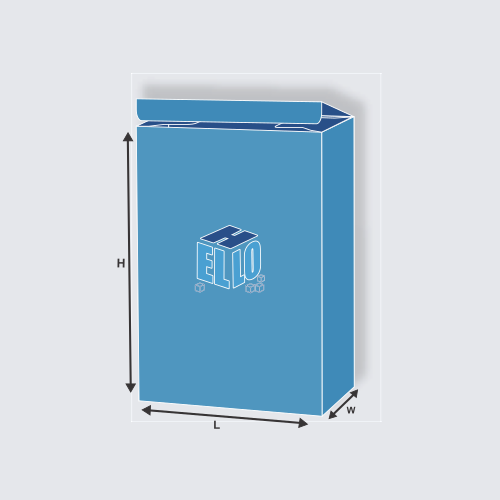
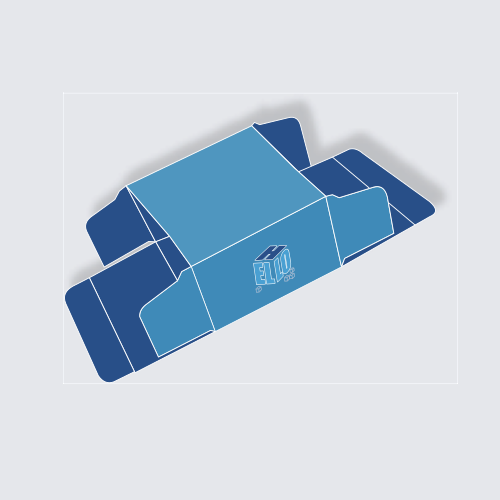

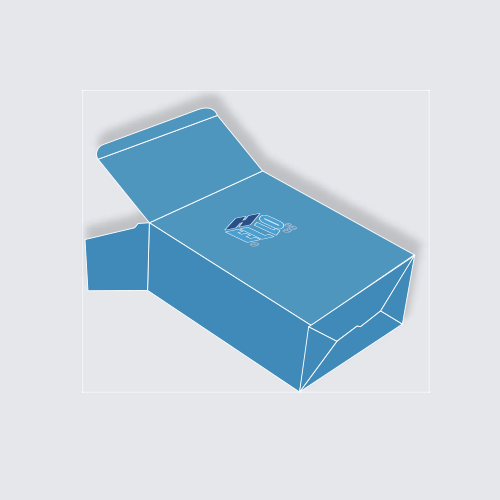
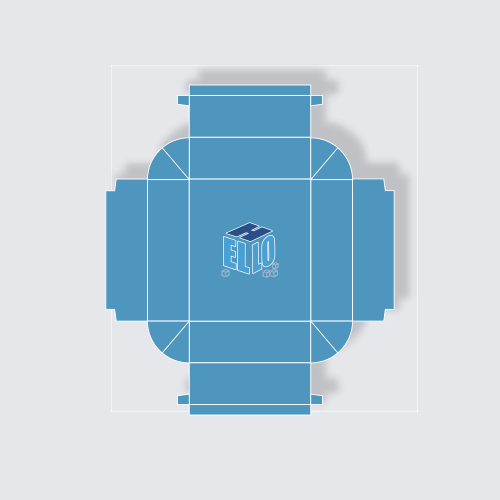

Select structural box designs prior to final artwork creation. In commercial manufacturing, packaging engineers first evaluate load-bearing requirements, folding sequences, stacking resistance, and freight logistics. A visually stunning design is ineffective if the underlying structure fails under compression or slows automated filling lines.
Key Structural Considerations for Importers & Procurement Teams
When placing high-volume B2B packaging orders, selecting the right box style requires balancing material performance with production and logistics costs:
- Structural Load & Stacking Compression: Heavier goods such as glass jars, cosmetics, or hardware require reinforced auto-bottom locks or E/B-flute corrugated structures rather than simple folding paperboard.
- Fulfillment Speed: Pre-glued structures like Auto Lock Bottoms erect in a fraction of a second, significantly lowering labor costs on high-speed fulfillment lines compared to manual folding styles.
- Freight & Flat Storage Efficiency: Folding cartons ship flat in bulk cartons, drastically reducing transit volume and warehouse storage footprints prior to final product packing.
- Dieline Precision & Score Line Protection: Critical artwork elements and barcode data must avoid heavy score and crease lines to prevent ink cracking and scanning errors during logistics handling.
Rigorous Quality Assurance & ISO Compliance
Every custom dieline generated by our engineering department undergoes automated CAD validation, digital 3D prototyping, and stress testing. We verify Mullen bursting strength, Edge Crush Tests (ECT), and ink adhesion to ensure your mass production run arrives defect-free and ready for seamless distribution.