Knowledge Base & Articles
Explore expert tips, material comparisons, structural ideas, and packaging trends to elevate your brand's unboxing experience.
Choosing Custom Candle Packaging Boxes in 2026 requires more than attractive colors and a premium logo. Candle brands now compete through protection, sustainability, shelf presence, and unboxing quality. Grand View Research valued the global candles market at approximately $12.88 billion in 2022. Its report also projects steady growth through 2030. This expansion increases pressure on brands to package products more thoughtfully.
Packaging decisions should begin with the candle itself. Measure the jar, lid, wick position, and outer finish. A snug insert can prevent glass movement during delivery. A rigid structure may suit luxury candles, while lightweight paperboard can reduce shipping costs. Smithers’ sustainable packaging research highlights recyclable materials, fiber-based solutions, and reduced material use as important industry directions. McKinsey’s packaging consumer research also found that many consumers consider sustainability when choosing products. However, sustainability claims need evidence. “Eco-friendly” is not enough.
Practical testing remains essential. Drop-test a packed candle from several angles. Check whether foil stamping scratches easily. Examine how the box feels after exposure to fragrance oils and humidity. Small failures matter. A beautiful box can still crease, loosen, or trap heat. The wrong coating may also weaken recycling options. Custom Candle Packaging Boxes should therefore balance brand identity, product safety, cost, and verified environmental performance. Data offers guidance, not certainty. Buyer expectations vary across regions and channels. Review supplier samples, request material documentation, and test the final structure before placing a large order. That cautious process can protect both the candle and the brand’s credibility in 2026.
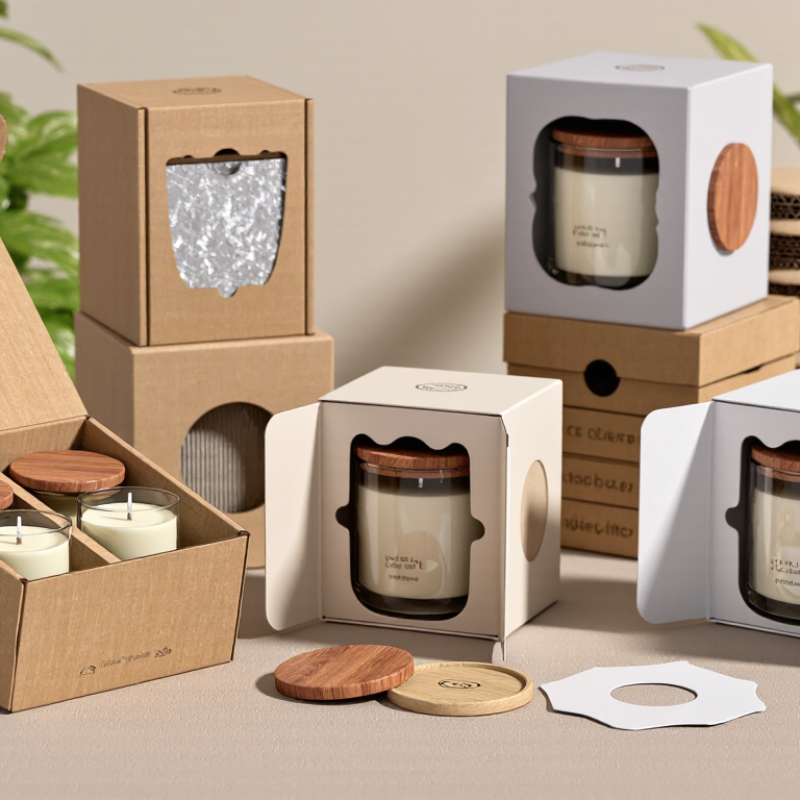
How to Choose Custom Candle Packaging Boxes in 2026?
Candle dimensions should guide the box before artwork or material selection. Measure the candle’s height, diameter, lid clearance, and total packed weight. Leave controlled space for protective inserts, not random empty volume. ISTA 3A evaluates parcel shipments weighing up to 70 kilograms. Its sequence includes atmospheric conditioning, shock, vibration, and compression. A custom box should survive these stresses with the candle inside.
Fragility needs practical testing. Glass jars may crack from corner impacts, while wax can chip, soften, or deform after temperature exposure. Use ISTA 3A-style conditioning before finalizing the structure. Record visible damage, lid movement, wax marks, and insert displacement after each test stage. Small gaps matter. A 3-millimeter shift can become a loud rattle during vibration.
The U.S. Census Bureau reported that e-commerce represented 16.1% of total retail sales in 2024. More candles now travel through parcel networks, not controlled store delivery. The 2024 Packaging Machinery Manufacturers Institute industry report also identified automation and protective packaging as continuing investment areas. This supports accurate dimensions and machine-friendly box construction. Still, data cannot replace hands-on testing. My own packaging reviews often find a weak corner after a clean first trial. That is uncomfortable, but useful. Retest with realistic shipping weight, seasonal temperature changes, and the exact insert intended for production. A visually premium box can still fail ISTA 3A handling.
| Candle Format | Typical Product Dimensions (Diameter × Height) |
Typical Product Weight | Primary Fragility Risks | Recommended Internal Protection | Custom Box Starting Dimensions (Internal, L × W × H) |
ISTA 3A Transit-Test Focus |
|---|---|---|---|---|---|---|
| Small Glass Jar | 70–80 mm × 55–70 mm | 180–300 g | Glass breakage, lid loosening, wax surface damage, label scuffing | Die-cut paperboard insert or molded-pulp cradle; minimum 6–8 mm clearance from box walls | 90 × 90 × 85 mm | Package drops, random vibration, compression, and leakage or closure inspection after testing |
| Medium Glass Jar | 80–95 mm × 75–95 mm | 350–550 g | Sidewall cracking, base impact, lid displacement, carton compression | Full-perimeter insert with top and bottom retainers; avoid direct glass-to-carton contact | 108 × 108 × 115 mm | Use a packed product that represents the final weight, closure, fill level, and insert geometry |
| Large Glass Jar | 95–115 mm × 85–120 mm | 600–950 g | High impact energy, bottom fracture, wax separation, elevated shipping weight | Rigid die-cut board or molded-pulp structure on all six sides; reinforced base support | 130 × 130 × 145 mm | Pay particular attention to shock, vibration, and compression because package mass increases load transfer |
| Tin Candle | 70–90 mm × 45–70 mm | 150–350 g | Dent deformation, lid separation, wax melting or surface marking | Paperboard collar, snug-fit insert, and abrasion-resistant inner wrap | 100 × 100 × 85 mm | Check package deformation, lid retention, product movement, and temperature-related cosmetic damage |
| Travel Tin | 55–70 mm × 35–50 mm | 80–180 g | Rattling, lid opening, corner crushing, surface abrasion | Close-fitting paperboard insert or folded retention tabs; limited free space | 78 × 78 × 65 mm | Vibration and repeated handling are key; confirm the lid remains closed and the tin stays centered |
| Pillar Candle | 60–90 mm × 100–200 mm | 250–800 g | Edge chipping, bending, surface scratches, wick damage | Top and bottom cushioning with a snug sleeve; use a rigid outer carton for tall formats | 105 × 105 × 220 mm | Evaluate vertical orientation, top-load compression, edge impact, and movement along the long axis |
| Taper Candle Pair | 20–25 mm × 200–300 mm per candle | 120–300 g per pair | Bending, tip breakage, wax scuffing, wick and surface abrasion | Individual channels, end caps, and a rigid long-format sleeve to prevent lateral movement | 45 × 45 × 320 mm | Treat as an elongated product format; focus on bending, end impacts, vibration, and carton buckling |
| Multi-Candle Gift Set | Product set: 180–260 mm × 70–130 mm | 900–2,000 g | Item-to-item contact, glass breakage, insert collapse, carton panel deformation | Separate compartments, rigid perimeter frame, top pad, and bottom load-distribution board | 220 × 180 × 150 mm | Test the complete retail configuration; verify internal separation, compression strength, and cumulative product movement |
| High-Fragility Glass Vessel | 90–125 mm × 80–150 mm | 500–1,200 g | Brittle glass fracture, sharp-edge impact, lid failure, leakage after shock | Engineered molded-pulp or foam-free rigid retention system with no direct contact at glass edges | 145 × 145 × 180 mm | Use the highest practical protection level; inspect for cracks, leakage, closure displacement, and hidden damage |
Measure height, diameter, lid clearance, and packed weight. Add controlled space for inserts. Avoid large, empty gaps.
Use a small, stable clearance around the candle. A three-millimeter shift can create rattling during vibration. Tight fit matters.
Check cracked glass, chipped wax, softened surfaces, lid movement, and displaced inserts. Record damage after every test stage.
Heat can soften or deform wax. Cold can increase brittleness. Test seasonal conditions before approving the final structure.
Smooth white board around 250–400 gsm suits lighter jars and gift sets. Kraft around 350–600 gsm offers stronger compression resistance.
No. A loose tray can still let the jar move. Fit matters more than weight alone. I learned this late.
Test compression, vibration, shocks, and atmospheric changes with the candle inside. Use the exact insert planned for production.
Shake the packed box gently. Press the corners. Stack boxes for 24 hours. Inspect the lid afterward.
Request valid certificates, laboratory reports, material specifications, disposal conditions, and declarations. Match every claim with the actual production materials.
Review coatings, adhesives, inks, windows, and inserts separately. Avoid vague claims like “fully eco-friendly.” Small material changes can alter recyclability.
Choosing Custom Candle Packaging Boxes in 2026 requires balancing product safety, presentation, sustainability, and cost. Start by measuring each candle’s dimensions, weight, glass thickness, and breakage risk, then use ISTA 3A transit-test criteria to evaluate how the package may perform during shipping. For structural protection, 250–400 gsm SBS is suitable for many lightweight designs, while 350–600 gsm Kraft can provide added strength for heavier or more fragile candles. Inserts should be matched to candle weights between 100 g and 500 g, keeping the product centered and reducing movement, impact, and surface damage.
Before placing an order, verify whether the materials and production process support FSC sourcing, ISO 18606 recyclability or compostability requirements, and applicable EU PPWR obligations. A practical supplier comparison should review minimum order quantities, unit pricing at different volumes, sampling charges, production capacity, and expected 2026 lead times. This approach helps businesses select packaging that protects candles, supports responsible material choices, and remains commercially efficient.