Knowledge Base & Articles
Explore expert tips, material comparisons, structural ideas, and packaging trends to elevate your brand's unboxing experience.
Choosing Custom Burger Packaging Boxes is more than picking a size and printing a logo. The right box should protect the burger, suit your service style, and make the meal easy to carry. A fresh, hot burger can release steam and grease, so material strength, food-contact suitability, and ventilation deserve careful attention. Small details matter. A lid that presses the bun or a base that softens during delivery can change the customer’s experience.
Start by measuring your burgers, including toppings and wrapping, then consider how orders travel from kitchen to customer. A dine-in box may need different features from packaging used for delivery or takeaway. Look at board thickness, grease resistance, closure design, and whether vents help manage moisture without cooling the food too quickly. There is no perfect box for every menu. That is worth remembering. A feature that works for one restaurant may add cost or inconvenience for another.
Branding also matters, but it should not crowd out function. Clear colors and a readable logo can make packaging recognizable, while practical printing choices help keep production consistent. Ask suppliers for material details, samples, and guidance on suitable food packaging. Test a sample with an actual burger, not just an empty box. Hold it, stack it, and check it after a short delivery-style journey. Some choices will still involve compromise. Comparing performance, price, and customer feedback can help you select Custom Burger Packaging Boxes that fit your menu and daily operations.
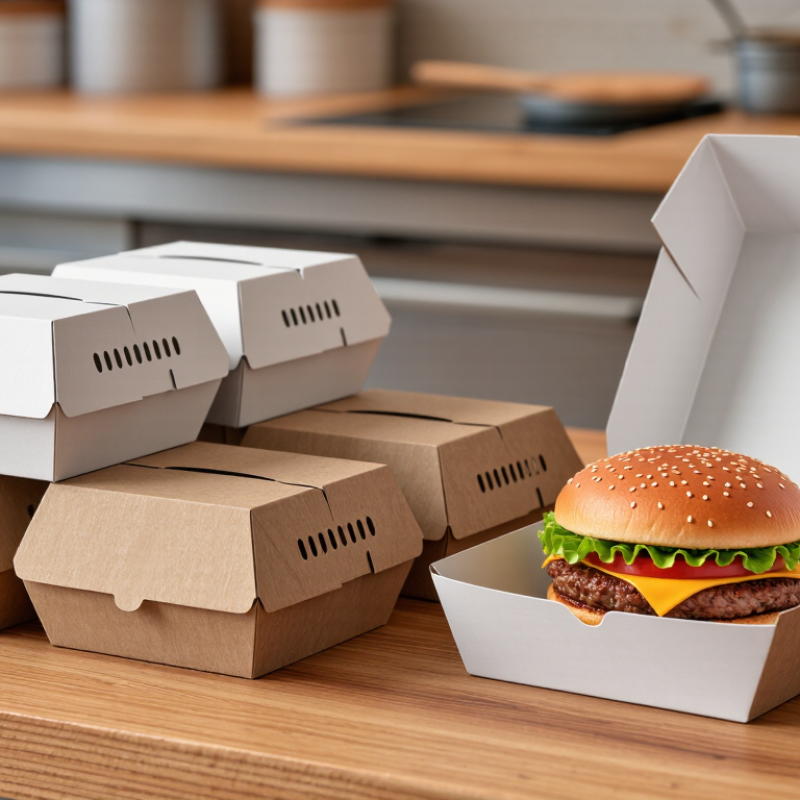
A thin smash burger usually needs a snug, shallow box that limits sliding without crushing its crisp edges. A tall double patty needs more headroom and a firm base that stays level during delivery. Sauce changes the choice. For juicy burgers, consider a grease-resistant inner surface and enough room to keep toppings from smearing. Soft vegetable patties may break if they are tightly packed or stacked.
Think about how each burger is served. A box for a quick counter order may prioritize easy opening and efficient stacking, while delivery adds travel time and trapped steam. Small vents can release moisture, but too many may cool the burger and dry its bun. There is no perfect vent pattern. Test a few options with actual menu items.
Pack a freshly cooked burger, then inspect it after your typical wait or delivery period. Check the bun, cheese, wrapper, and box base for sogginess or grease. A package that looks ideal on a desk may disappoint after a ten-minute ride. I would also test different fillings separately; one box size may not suit every burger. If fries travel in the same order, check that they do not press against the burger or trap extra steam.
Choose a shallow, snug box that limits sliding without crushing crisp edges. Test the fit with the burger, not an empty box.
Allow extra headroom and use a firm base that stays level during delivery. Check that the lid does not press into the top bun.
Look for food-contact materials with a suitable grease barrier. Test a hot burger for your usual delivery time. Check the corners and base.
No. Small vents can release steam, but too many may cool the burger and dry its bun. There is no perfect pattern.
Not necessarily. Extra sauce, lettuce, or a soft vegetable patty can change what fits. I might be overthinking it, but test fillings separately.
Pack a freshly cooked burger and inspect it after a typical trip. Check the bun, cheese, wrapper, and box for moisture or grease. A desk test can mislead.
Test the design on a folded sample. Small type can blur near a seam, and dark ink may look different on kraft board. Check it under warm counter lighting.
Ask whether the inks and coatings suit the board, food contact, and local recovery options. Check for smudges and color shifts. A QR code must scan on a curved surface.
Containers and packaging made up 28.1% of municipal solid waste generation in the United States in 2018, according to the article. That figure covers many materials, not burger boxes alone.
Choosing Custom Burger Packaging Boxes starts with understanding the burgers they need to hold, including their size, toppings, and whether they will be served immediately or for takeaway. These details help determine the level of support, ventilation, and insulation needed to keep food presentable. Select food-safe materials that can handle warmth and grease without becoming soggy or difficult to carry.
Next, match the box dimensions and structure to the burger to reduce movement while keeping the packaging practical to assemble and store. Plan printing details such as colors, logos, and product information so the design is clear and consistent with your business identity. Finally, weigh sustainability goals against durability and budget, and compare suppliers based on material choices, customization capabilities, quality, and order requirements. A thoughtful balance of these factors can create packaging that protects the meal and improves the customer experience.