Knowledge Base & Articles
Explore expert tips, material comparisons, structural ideas, and packaging trends to elevate your brand's unboxing experience.
Choosing Custom Cosmetic Packaging Boxes is no longer only a branding decision. It affects protection, shelf appeal, customer experience, and environmental performance. McKinsey & Company’s 2023 beauty report estimates that the global beauty market could approach $580 billion by 2027, with online channels continuing to expand. That growth increases packaging pressure. A box must survive delivery, display clearly, and avoid unnecessary material.
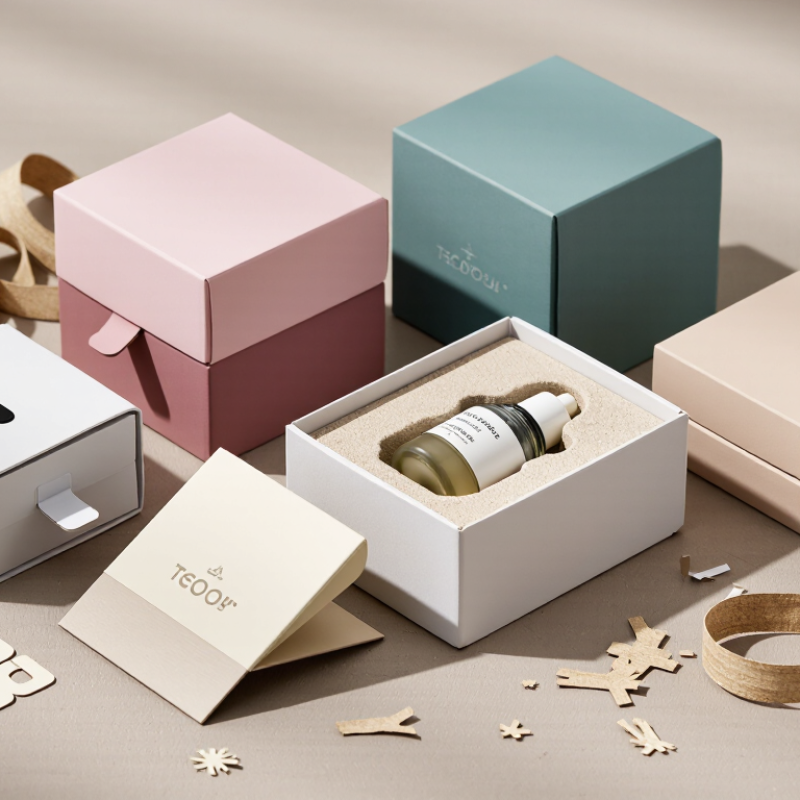
Packaging specialist Paul Jenkins of ThePackHub has stated, “Sustainability is not a trend; it is a necessity.” His point matters for cosmetic brands. A recycled board box may reduce virgin material, but coatings, inserts, adhesives, and transport weight still deserve examination. Smithers’ packaging research also highlights rising demand for recyclable, fiber-based, and right-sized formats. The details are tangible: a rigid lid that closes cleanly, a molded insert that prevents bottle movement, and print inks that remain sharp after handling.
This guide presents 10 practical tips for selecting Custom Cosmetic Packaging Boxes. It considers material strength, dimensions, finishing, customization, minimum order quantities, supplier capability, and total cost. It also asks harder questions about recyclability and actual product protection. No checklist is perfect. A premium magnetic box may impress customers, yet create avoidable waste if its structure is oversized. A simpler folding carton may perform better.
The strongest decision combines brand experience with measurable evidence. Request samples, test compression, inspect color consistency, and verify sustainability claims. Beautiful packaging is useful only when it protects the product and earns consumer trust.
10 Tips for Choosing Custom Cosmetic Packaging Boxes
Define Your Product, Audience, and Packaging Requirements
Tip 1: Describe the product clearly. A glass serum bottle needs stronger protection than a lightweight powder compact. Tip 2: Measure the container, cap, applicator, and safety seal before requesting a dieline. Tip 3: Identify your audience. A premium skincare buyer may expect rigid board, soft-touch texture, and precise inserts. A younger audience may prefer lighter, recyclable materials. Tip 4: Match the box with the product’s price and usage. An oversized box can feel careless, even when it looks expensive.
Tip 5: Set packaging requirements before choosing decoration. Decide the board thickness, insert style, closure, finish, and print colors. Tip 6: Ask for material documentation and recycling guidance. The U.S. EPA reported 14.5 million tons of plastic containers and packaging in municipal waste in 2018, with only 2.4 million tons recovered. Less material can matter. Tip 7: Review sustainability claims carefully. McKinsey’s 2023 global packaging research identified recyclability as a leading consumer sustainability concern. Yet “eco-friendly” remains too vague without evidence. Tip 8: Control the empty space. A beautiful box can still be wasteful.
Tip 9: Request a physical prototype. Check whether the bottle slides, rattles, or damages the corners. Tip 10: Test the box through stacking, handling, and moderate humidity. Small failures become expensive at scale. Packaging teams often focus too heavily on appearance. That is a mistake worth questioning. A lower-cost structure may protect better, ship more efficiently, and feel more honest to the customer. Keep the final requirements written, measurable, and easy for a supplier to verify.
| No. | Decision Area | Recommended Requirement | Useful Specification or Metric | Why It Matters |
|---|---|---|---|---|
| 1 | Define the Product | Identify the product type, container shape, closure, and total packed weight before selecting a box. | Record product length × width × height, net weight, and gross packed weight. | Accurate product details reduce excess space, movement, material use, and transit damage. |
| 2 | Understand the Target Audience | Match the visual style, opening experience, and information hierarchy to the intended customer group. | Define preferred style, price positioning, accessibility needs, and purchase channel. | Packaging is more effective when its appearance and usability reflect customer expectations. |
| 3 | Choose an Appropriate Box Style | Select a folding carton for efficient retail packing, a rigid box for a premium presentation, or a mailer for direct shipping. | Compare assembly time, storage volume, opening method, and protection level. | The structure should support the product’s sales channel and required unboxing experience. |
| 4 | Select the Board Material | Use paperboard for lightweight cosmetic cartons and stronger corrugated construction when shipping protection is required. | Evaluate board thickness, stiffness, compression resistance, and product weight. | Material selection affects durability, print quality, weight, cost, and recyclability. |
| 5 | Add Internal Protection | Use an insert, divider, or fitted support when containers may move, leak, scratch, or break. | Allow a secure fit with minimal movement while avoiding pressure on caps, pumps, or glass surfaces. | A properly fitted interior helps protect the product during handling and transportation. |
| 6 | Plan Product Information | Reserve clear areas for the product name, shade or variant, net quantity, directions, warnings, and required regulatory information. | Check local cosmetic labeling rules before final artwork approval. | Readable and accurate information supports compliance and helps customers make informed choices. |
| 7 | Set Print and Finish Requirements | Choose a suitable color process and finish based on the desired appearance, handling conditions, and budget. | Review color proofs and test coatings for scuffing, moisture exposure, and rubbing. | Finishing choices influence visual appeal, surface durability, and production cost. |
| 8 | Consider Sustainability | Prefer right-sized packaging, fiber-based materials, and designs that avoid unnecessary mixed components. | Review recycled content, material weight, recyclability, and disposal instructions for the intended market. | Reducing material use can lower packaging waste and improve end-of-life handling. |
| 9 | Match the Box to the Sales Channel | Design differently for retail shelves, subscription shipments, e-commerce orders, or gift presentation. | Evaluate shelf visibility, barcode placement, shipping dimensions, and dimensional weight. | A box that works in a store may not provide sufficient protection or efficiency for parcel delivery. |
| 10 | Test Before Ordering at Scale | Approve a physical prototype and inspect fit, appearance, assembly, labeling, and shipping performance. | Complete fit checks, repeated opening tests, stacking checks, and a representative shipping test. | Testing identifies structural, printing, and logistics problems before full production. |
Note: Final dimensions, materials, labeling, and test methods should be confirmed according to the product format, destination market, and applicable packaging requirements.
Measure the container, cap, applicator, safety seal, and insert. Include their height, width, and movement space. Small errors can prevent proper closing.
Consider age, price expectations, and daily use. Premium buyers may prefer rigid board and soft-touch texture. Younger shoppers may value lighter, recyclable materials.
Excess empty space can increase material use and shipping volume. It may also make the product feel careless. A smaller, secure fit often feels more honest.
Define board thickness, insert style, closure, finish, and print colors. Write each requirement clearly. Vague instructions invite expensive misunderstandings.
Ask for material documents and recycling guidance. Treat “eco-friendly” as incomplete without evidence. Less material may be the better choice.
A prototype reveals sliding, rattling, weak corners, and poor alignment. Digital previews can hide these problems. Touch the box before approving production.
Check colors on coated and uncoated board. Confirm the printing method and contrast. Small text may disappear after embossing or other decoration.
Test stacking, handling, and moderate humidity. Check opening direction, glue areas, and folding points. Small failures become costly at scale.
No. The box must protect the product and communicate clearly. We may overvalue appearance. A plain structure can perform better.
Choosing the right Custom Cosmetic Packaging Boxes requires a clear understanding of your product, target audience, and packaging goals. Start by identifying the product’s size, shape, weight, and usage requirements, then select suitable materials, dimensions, and structural designs that provide convenience and visual appeal. Consider how the box will open, close, stack, and display while maintaining a professional presentation.
Branding and customization are also essential. Evaluate printing methods, colors, finishes, inserts, labels, and other design features that can communicate your message effectively. At the same time, confirm that the packaging offers adequate protection during storage and shipping, uses sustainable materials where possible, and meets relevant safety and regulatory requirements. Finally, compare suppliers based on product quality, customization capabilities, pricing, minimum order quantities, samples, communication, and production timelines. A careful evaluation of these factors can help you choose packaging that balances appearance, performance, cost, and environmental responsibility.