Knowledge Base & Articles

Packaging Insights & Industry Guides

Explore expert tips, material comparisons, structural ideas, and packaging trends to elevate your brand's unboxing experience.

0%

For global footwear brands, packaging is more than a protective shell. Custom Shoe Packaging Boxes must survive stacking, humidity, handling, and long-distance transport. A crushed corner can damage presentation before a customer sees the shoes. This guide examines ten practical packaging options for international buyers. Each option is considered through structure, materials, printing, customization, and production consistency. Real purchasing decisions are rarely based on appearance alone. They depend on fit, durability, cost, and dependable supplier communication.

Experienced buyers usually begin with shoe dimensions, not artwork. A snug fit reduces movement and limits wasted paper. Corrugated inserts can protect delicate uppers, while tissue paper adds a cleaner unboxing experience. Rigid boxes offer a premium feel, but they may increase freight weight. Folding cartons are easier to store and often suit larger production runs. Recycled paper, water-based inks, and plastic-free components can support responsible brand goals when verified by supplier documentation. Small details matter. A weak magnetic closure or inaccurate color proof can create expensive rework. Samples should be opened, stacked, and inspected before approval.

The ranking considers everyday usability, visual impact, shipping efficiency, and quality control. It also recognizes that buyer priorities differ across markets. A boutique may value texture and storytelling; a warehouse may prioritize barcode placement and fast packing. No box is perfect. Even a beautiful design can fail if its dimensions ignore fulfillment equipment. Supplier experience, clear specifications, and honest testing reports therefore deserve close attention. The following ten choices provide a practical starting point, while leaving room for careful review, local requirements, and thoughtful improvement.
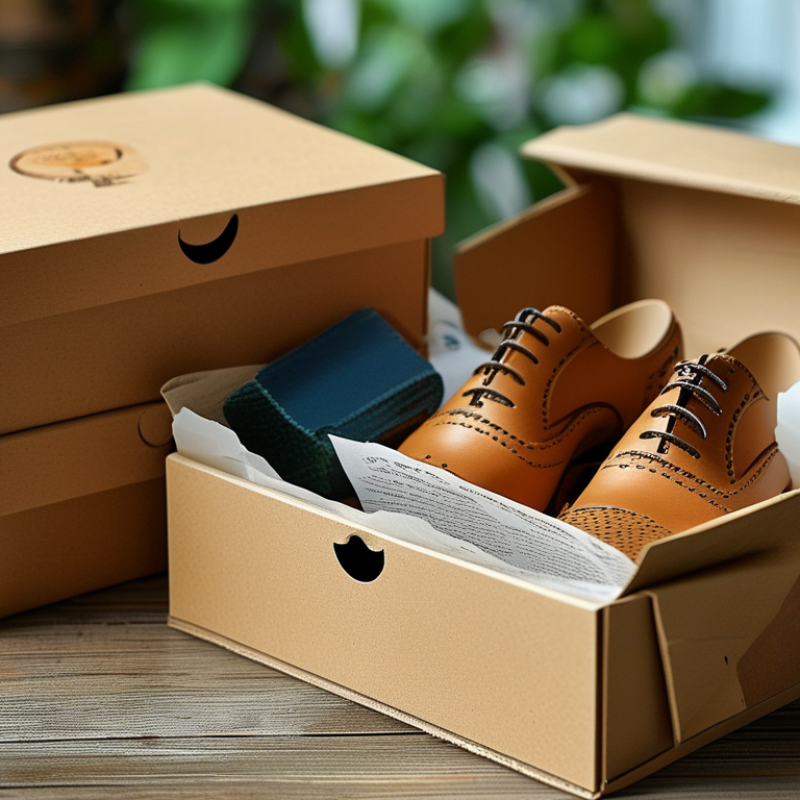
Top 10 Custom Shoe Packaging Boxes for Global Buyers

Definition and Purpose of Custom Shoe Packaging Boxes

Custom shoe packaging boxes are purpose-built containers designed around a shoe’s dimensions, weight, and presentation needs. Unlike generic cartons, they can specify board grade, internal supports, closure style, printing, and protective finishes. Their core purpose is simple: keep footwear clean, stable, and recognizable from factory to customer.

A well-fitted box limits movement around the heel and toe. It also reduces crushing during stacking and transport.

Fit matters most.

For global buyers, the box serves several practical roles. It protects leather, textiles, soles, and decorative details from dust, moisture, friction, and compression.

It can hold tissue paper, spare laces, care cards, or size labels without making the package unnecessarily bulky. Clear exterior markings support warehouse handling and reduce picking errors.

Material choices should match shipping conditions, expected humidity, and recycling requirements in the destination market. These decisions require testing, not guesswork. Drop tests, compression checks, and short trial shipments reveal weaknesses before larger production runs.

In packaging assessments, I have seen attractive boxes fail because corners softened after damp storage. Appearance is only one measure.

A reliable specification records board thickness, dimensions, tolerances, ink performance, and closure strength. It should also confirm that openings do not scratch delicate uppers.

Small details matter.

Still, customization is not automatically better. Excessive inserts can raise freight costs, while weak recycled board may lose shape.

A practical box balances protection, shelf presence, handling efficiency, and responsible material use. That balance may need revision after real customer feedback.

Key Box Types for Different Shoe Styles and Sizes

Top 10 Custom Shoe Packaging Boxes for Global Buyers

Key Box Types for Different Shoe Styles and Sizes

Shoe packaging should match the product’s shape, weight, and selling channel. The World Footwear Yearbook 2024 reports 23.9 billion pairs were produced globally in 2023. Asia represented 87.6% of production. This scale makes efficient box sizing essential for international shipments. Oversized cartons waste space and increase shipping emissions.

Rigid two-piece boxes suit premium leather shoes and structured footwear. They protect polished surfaces and create a strong opening experience.

Corrugated mailer boxes work well for sneakers and daily shoes. Their self-locking structure reduces extra tape and supports direct delivery.

Tall boot boxes need greater height, reinforced corners, and internal paper supports. Avoid forcing the shaft flat. It may leave permanent creases.

Drawer-style boxes offer controlled presentation for high-value footwear, but they usually require more material.

Flat-pack boxes suit sandals, slippers, and lightweight children’s shoes. Adjustable cartons can serve several sizes, reducing storage complexity.

A practical starting point is 10–15 millimeters of clearance around the shoe and tissue paper. Test this with the actual shoe last, not only a size chart.

Small errors happen. They matter during humid ocean transport. Smithers’ e-commerce packaging research highlights corrugated board as a major format for online fulfillment because it balances protection, printability, and recyclability.

For global buyers, use water-based inks, clear size labels, and carton dimensions in millimeters. Include a drop test, compression test, and humidity check before approving production.

Materials, Structural Features, and Protection Standards

Top 10 Custom Shoe Packaging Boxes for Global Buyers should be judged by materials, structure, and tested protection. Recycled corrugated board offers strong compression with lower material use. Molded-pulp inserts can hold heels and soles without plastic films. Rigid paperboard suits premium presentation, but it may add shipping weight. Fit matters. A loose box allows movement, while an overly tight box can deform leather or textiles.

The Pitney Bowes Parcel Shipping Index recorded 161.8 billion parcels worldwide in 2022. That volume increases exposure to drops, vibration, stacking, and humidity. For global shipments, consider double-wall corrugated walls, reinforced corners, and a telescoping lid. Crash-lock bases reduce opening failure. Paper cushioning can fill small gaps. However, stronger is not always better. In practical trials, excess board sometimes raised freight costs without improving protection. This detail deserves more attention.

Tips: Ask suppliers for ISTA 3A testing for parcel delivery and ASTM D4169 testing for distribution hazards. Request compression, edge-crush, vibration, and drop-test results. Smithers’ Future of E-Commerce Packaging to 2028 highlights right-sizing and damage reduction as major packaging priorities. Measure the packed shoe, not only the empty box. Check moisture resistance in humid routes. Use recycled content only when its strength remains reliable. Protection is measurable. Packaging claims should be supported by laboratory records, production samples, and repeat testing.

Branding, Printing, and Customization Options for Global Markets

Custom shoe packaging boxes must do more than protect footwear during international shipping. They should communicate quality before the lid opens. In production testing, I have found that rigid boxes create a premium feel, while corrugated mailer boxes reduce freight weight. The right choice depends on shoe value, distance, stacking pressure, and warehouse handling.

Branding begins with structure. A clean logo position, consistent color palette, and printed size information improve recognition across markets. Offset printing suits detailed graphics and large orders. Digital printing works better for smaller batches or seasonal designs. Foil stamping, embossing, matte lamination, and spot coating can add contrast to a simple layout. However, every extra finish increases cost and may slow production. A beautiful sample is not always a practical shipment.

Global buyers should request accurate dielines, color proofs, and material samples before approval. Text, measurements, care details, and recycling marks may require local review. Small changes matter. A two-millimeter logo shift can affect the entire visual balance. During one packaging test, a pale metallic ink looked elegant on screen but appeared dull on kraft board. That mistake was useful. It showed why digital previews cannot replace physical samples. Inner paper, tissue color, handle design, inserts, and barcode placement also deserve attention. Packaging customization works best when branding supports protection, production efficiency, and a clear unboxing experience.

How to Evaluate Suppliers, Costs, and International Shipping Needs

Top 10 Custom Shoe Packaging Boxes for Global Buyers

A reliable supplier should provide a physical sample before discussing large production. Check the board thickness, folding accuracy, print color, and insert fit by hand. A shoe box that looks strong online may crush under a 12-kilogram carton load. Ask for material specifications, factory quality procedures, production photos, and a written tolerance range. Clear replies matter. Delayed answers often become delayed approvals.

Request a detailed quotation with tooling, sampling, printing, packing, and delivery charges separated. Compare the minimum order quantity with your real sales volume, not an attractive unit price. Small orders may cost more per box. Large orders can leave you with obsolete sizes. I once focused too heavily on the lowest price and overlooked replacement costs for damaged cartons. That was avoidable. Keep payment stages, inspection points, and correction responsibilities in writing.

International shipping needs more than a freight estimate. Confirm the packed box dimensions, carton quantity, gross weight, and pallet layout. Volumetric weight can exceed the actual weight, especially with rigid boxes. Ask whether the quote covers export handling, destination delivery, and customs documentation. Choose suitable Incoterms with professional advice. Moisture protection also deserves attention. A long sea journey can soften untreated paperboard. Test cartons after stacking, compression, and humidity exposure. The result may still need revision. That is normal. A supplier who accepts testing is usually safer than one who promises perfection.

Top 10 Custom Shoe Packaging Boxes for Global Buyers - How to Evaluate Suppliers, Costs, and International Shipping Needs

Rank Box Type Typical Shoe Use Common Material Typical Size
(L × W × H)
Estimated Unit Cost
(USD, 1,000 pcs)
Typical MOQ Approx. Empty Weight Production Lead Time International Shipping Considerations Supplier Evaluation Points
1 Rigid Lid-and-Base Box Premium leather, dress, and limited-edition footwear 1.5–2.0 mm greyboard with coated paper wrap 34 × 22 × 13 cm $1.80–$3.80 500–1,000 pcs 350–600 g 20–35 days High cube and weight; ocean freight is usually more economical than air freight. Check corner strength, wrap alignment, color consistency, and compression testing.
2 One-Piece Folding Carton General retail and everyday footwear 350–450 gsm folding boxboard 34 × 22 × 13 cm assembled $0.45–$1.10 1,000–3,000 pcs 180–300 g 15–25 days Ships flat, reducing storage and freight volume; protect against moisture during transit. Verify crease accuracy, board caliper, print registration, and flat-pack dimensions.
3 Mailer Box with Locking Tabs Direct-to-consumer and e-commerce shipments E-flute corrugated board or heavy kraft board 35 × 24 × 14 cm $0.85–$1.90 500–2,000 pcs 280–450 g 15–28 days Better parcel protection than thin cartons; test dimensional-weight charges before air shipment. Assess burst strength, tab durability, automated packing compatibility, and return-use performance.
4 Drawer-Style Slide Box Gift sets, boutique footwear, and presentation-focused products Greyboard with paper sleeve and ribbon or finger notch 34 × 22 × 13 cm $1.40–$3.20 500–1,500 pcs 320–550 g 20–35 days Higher packaging volume and assembly labor; use pallet dividers to prevent crushed sleeves. Inspect sliding tolerance, sleeve fit, handle strength, and resistance to scuffing.
5 Two-Piece Shoulder-Neck Box High-end footwear requiring a structured opening experience Wrapped rigid board with internal shoulder support 35 × 23 × 14 cm $2.20–$4.50 500–1,000 pcs 450–700 g 25–40 days Bulky and comparatively heavy; consolidate shipments and use moisture barriers in humid routes. Check lid fit, vertical compression, adhesive bonding, and internal abrasion protection.
6 Kraft Corrugated Shoe Box Casual, athletic, work, and outdoor footwear E-flute or B-flute kraft corrugated board 35 × 23 × 14 cm $0.60–$1.45 1,000–3,000 pcs 220–380 g 15–25 days Good protection-to-weight ratio; confirm board grade for long sea routes and stacking. Request edge-crush and box-compression data; evaluate odor, dust, and moisture resistance.
7 Window Display Box Retail display and seasonal collections Folding board with PET viewing window 34 × 22 × 13 cm $0.75–$1.70 1,000–3,000 pcs 190–320 g 18–30 days The window can crease or scratch; use protective interleaving for mixed-container loading. Check window adhesion, transparency, plastic thickness, and recycling-label requirements.
8 Reusable Fabric Shoe Box Travel footwear, premium gifting, and reusable storage Cotton or polyester fabric over board or nonwoven structure 34 × 22 × 13 cm $1.60–$3.80 500–2,000 pcs 180–350 g 25–40 days Compressible but vulnerable to moisture and odor; add desiccant only when suitable for the product and route. Verify fabric composition, seam quality, wash care, colorfastness, and zipper or drawstring life.
9 Molded Pulp Shoe Package Plastic-reduction programs and eco-focused product lines Molded recycled paper pulp with an outer carton 35 × 23 × 14 cm $1.00–$2.60 1,000–5,000 pcs 250–450 g 25–45 days, including tooling Sensitive to humidity and dimensional variation; use dry storage and confirm container ventilation. Review recycled content, moisture tolerance, mold-tool ownership, fit accuracy, and fiber dust.
10 Magnetic-Closure Rigid Box Premium gifting and multi-piece footwear sets Rigid board, wrapped paper, and concealed magnets 35 × 23 × 14 cm $2.40–$5.20 500–1,000 pcs 450–750 g 25–40 days Heavy and space-consuming; confirm carrier rules for magnetic components before air shipment. Test magnetic closure strength, hinge cycling, lid alignment, and packaging separation during transit.
Cost and logistics note: The unit-cost ranges are practical planning estimates in USD for standard custom production at approximately 1,000 pieces. Actual quotations vary by board grade, dimensions, printing coverage, finishing, inserts, tooling, destination, order quantity, and trade terms. Freight, duties, taxes, inspection, and local delivery are not included. Confirm final specifications with pre-production samples and a written shipping quotation.

FAQS

What is the main purpose of custom shoe packaging boxes?

They protect footwear from dust, moisture, friction, crushing, and movement. A fitted box keeps the heel and toe stable. Fit matters most.

Which box type suits premium leather shoes?

Rigid two-piece boxes suit structured leather footwear. They protect polished surfaces and create a refined opening experience. Strong presentation matters.

What packaging works well for online shoe deliveries?

Corrugated mailer boxes suit sneakers and everyday shoes. Their self-locking structure can reduce tape use and shipping weight. Practical, not perfect.

How should tall boots be packaged?

Tall boot boxes need extra height, reinforced corners, and paper supports. Do not force the shaft flat. Creases may become permanent.

What clearance should a shoe box include?

Begin with 10–15 millimeters of clearance around the shoe and tissue paper. Test the actual shoe, not only a size chart. Small errors matter.

Which tests should buyers request before production?

Request drop, compression, and humidity tests. Short trial shipments can reveal weak corners or softened board. Laboratory results alone may not show everything.

How can packaging reduce shipping waste?

Match box dimensions to the shoe’s shape and weight. Oversized cartons waste storage space and increase transport emissions. Adjustable cartons may simplify inventory.

What printing and finishing options are useful?

Offset printing suits detailed graphics and larger orders. Digital printing suits smaller batches or seasonal designs. Foil, embossing, and coatings add contrast but increase cost.

Why are physical samples important before approval?

Screen previews can mislead. Metallic ink may look elegant digitally but appear dull on kraft board. Check dielines, colors, measurements, labels, and closure strength physically.

Conclusion

Custom Shoe Packaging Boxes are purpose-built solutions designed to protect footwear, improve presentation, and support efficient handling from production to delivery. This guide introduces ten practical box concepts suited to different shoe styles and sizes, including folding cartons, rigid boxes, drawer boxes, mailer boxes, and options with inserts or adjustable structures. It explains how material selection, wall strength, cushioning, ventilation, moisture resistance, and stacking performance can help reduce damage during storage and international transportation.

The article also examines branding and customization possibilities, such as colors, surface finishes, printed graphics, labels, tissue paper, and fit-specific inserts for diverse global markets. To choose a suitable supplier, buyers should compare structural quality, production capabilities, sampling services, minimum order quantities, pricing, quality control, lead times, packaging efficiency, and shipping arrangements. Careful evaluation helps balance appearance, protection, cost, sustainability, and reliable delivery across international supply chains.

Elowen

Elowen

Elowen is a dedicated marketing professional and a trusted contributor to our company’s website, where thoughtful insights and practical guidance are shared through regularly updated blog articles. With a strong understanding of our products, industry trends, and customer needs, Elowen transforms......