Knowledge Base & Articles
Explore expert tips, material comparisons, structural ideas, and packaging trends to elevate your brand's unboxing experience.
What Are Custom Soap Packaging Boxes? They are purpose-built packages designed to protect, present, and identify individual soap products. Unlike standard cartons, they can match a soap’s dimensions, scent, shape, and brand personality. A handmade lavender bar may sit inside a soft purple sleeve. A premium charcoal soap may use a rigid black box with a clean white mark.
These boxes usually combine printed paperboard, kraft stock, corrugated layers, or specialty papers. Their construction may include tuck flaps, window cutouts, inserts, embossing, foil details, or matte coatings. The right choice depends on protection, budget, shelf conditions, and customer expectations. A beautiful box can still fail if it crushes during shipping. That part is easy to overlook.
Design authority Paul Rand once said, “Design is the silent ambassador of your brand.” His principle applies strongly to Custom Soap Packaging Boxes. The package speaks before the customer touches the soap. It can suggest natural ingredients, clinical cleanliness, luxury, simplicity, or honest craftsmanship. However, visual appeal should not replace practical testing. Designers must check folding accuracy, print legibility, moisture resistance, and product fit. Small gaps can create movement inside the box. Excessively tight packaging can damage delicate soap edges.
In this guide, we will examine materials, structural styles, printing methods, sustainability, and branding decisions. We will also question common assumptions. “Eco-friendly” is not always simple. A recyclable box with unnecessary layers may still create waste. Good packaging balances protection, appearance, usability, and responsible production.
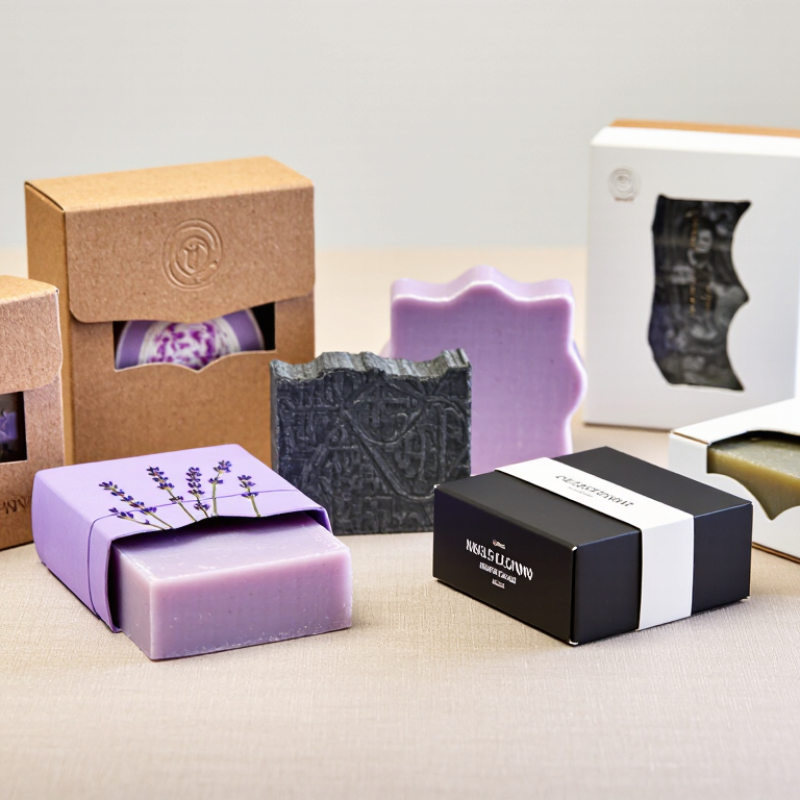
Custom soap packaging boxes are product-specific cartons designed to hold, protect, and present individual soap bars. Unlike standard cartons, they can match a bar’s dimensions, shape, weight, and selling environment. Their purpose is practical first: reduce scuffing, control movement, and protect the soap from dust, moisture, and handling damage.
They also communicate essential product information. A well-planned box can display ingredients, net weight, usage directions, batch details, and disposal guidance. It may use folding cartons, sleeves, tuck-end boxes, or window structures. Material selection matters. The box must feel clean without becoming unnecessarily heavy or difficult to recycle. According to Grand View Research, the global sustainable packaging market reached about $101.49 billion in 2022 and may grow at a 7.55% CAGR through 2030. This growth reflects stronger demand for responsible packaging choices.
Custom packaging serves a commercial purpose as well. Color, texture, and typography help a soap bar appear distinctive on a crowded shelf or online product page. Research from Smithers reports that the global packaging market exceeded $1 trillion in 2021, showing how packaging influences modern product competition. Still, attractive packaging is not automatically effective. Oversized boxes waste material and raise shipping costs. Excessive coatings can weaken recyclability. Sometimes, a simpler carton performs better. That point is easy to overlook. Good packaging balances protection, information, appearance, and measurable material use, while leaving room for honest improvement.
Custom soap packaging boxes protect a bar while presenting its scent, shape, and product information. Their structure usually comes from folding paperboard, but material selection deserves careful testing. A soap bar may release oils, fragrance, or moisture during storage. Not every carton works.
Solid bleached sulfate board offers a smooth surface for detailed printing and clean folding. Kraft paperboard provides a natural texture and strong visual appeal, especially for handmade soap designs. Recycled paperboard can reduce virgin material use, although its surface may show small fibers or color variations. That imperfection is real. It can also support an honest, crafted appearance.
For heavier soaps, corrugated paper adds cushioning through a fluted inner layer. A thin grease-resistant coating can help prevent stains from oils and essential ingredients. Water-based inks are commonly selected when printers need lower-odor production and easier recycling considerations. Clear windows use paper-based film or plastic film, depending on appearance and disposal requirements. Each choice changes the box’s feel, cost, and environmental profile.
Packaging engineers also examine board thickness, folding resistance, and die-cut accuracy. A box that looks attractive but tears near the tuck flap is a poor result. Small prototypes should be tested with real soap bars, not empty samples. Store them in warm, humid conditions. Details matter.
Custom soap packaging boxes come in several practical styles. Tuck-end cartons use locking flaps and suit handmade bars sold individually. Sleeve boxes slide over an inner tray, creating a layered opening experience. Two-piece rigid boxes feel stronger and protect premium soap from crushing. Pillow boxes are lightweight, but their curved shape offers less stacking stability. A 2024 Smithers analysis identifies paper-based packaging as a major growth area, driven by recyclability and plastic reduction demands.
Structural features determine whether a box performs well. A small soap carton usually needs an accurate dieline, firm paperboard, and clean folding scores. Locking tabs reduce adhesive use. An internal insert can stop the bar from moving during delivery. A die-cut window shows color and texture, although it may weaken moisture protection. Paperboard packaging also needs suitable coatings because soap can release oil or fragrance. The Ellen MacArthur Foundation reported that only 14% of plastic packaging was collected for recycling globally, reinforcing interest in fiber-based formats.
From practical packaging development, I would test compression, opening force, and humidity exposure before approving production. A beautiful box can still fail in a damp bathroom. That part is often underestimated. The Sustainable Packaging Coalition also stresses that material choices should match real recycling systems, not only marketing claims. I would question unnecessary magnetic closures and oversized inserts. They look refined, but they add cost and material without always improving protection.
The chart compares the typical number of primary structural units in four common soap packaging formats. A folding carton is formed from a single dieline with front, back, side, top, and bottom sections, while sleeve-and-tray, two-piece rigid, and drawer boxes generally use two main parts.
Custom soap packaging boxes are designed around a product’s size, shape, and brand message. They protect bars from dust, moisture, and handling damage. More importantly, they create a physical introduction before customers use the soap.
Printing choices should match the product’s character. Kraft board gives a warm, handmade appearance, while coated paperboard produces sharper colors and smoother images. Digital printing suits short runs and seasonal designs. Offset printing can provide consistent color across larger quantities. Some suppliers also offer foil stamping, embossing, debossing, and spot varnish. These details can make a small logo feel more distinctive, but excessive effects may increase cost and look crowded.
Clear branding needs practical information. A box may include the soap name, scent, net weight, ingredients, usage guidance, and storage advice. Readable type matters more than decorative lettering. A test sample should be checked under natural and indoor light because printed colors can change noticeably. This step is easy to skip. It should not be.
I have found that packaging teams sometimes focus heavily on appearance and overlook opening performance. A tight sleeve may look elegant but frustrate customers. A tuck-end box can open smoothly when its dimensions are measured accurately. Recyclable paper options are also worth reviewing, although sustainability claims should be supported by reliable material information. Small imperfections in early samples often reveal larger production problems.
| Packaging Dimension | Common Options | Typical Specifications | Branding and Printing Value | Practical Considerations |
|---|---|---|---|---|
| Primary Box Material | Folding carton board, kraft board, or recycled paperboard | Common paperboard weights range from approximately 250 to 400 gsm for individual soap boxes | Provides a printable surface for logos, product information, patterns, and color systems | The board should be rigid enough to protect the soap while remaining easy to fold and transport |
| Box Structure | Sleeve box, tuck-end box, reverse-tuck box, or rigid box | Tuck-end cartons are widely used for lightweight bar soaps; rigid boxes are thicker and more substantial | The opening style can support a minimalist, premium, natural, or gift-oriented presentation | Structural choices affect material usage, assembly time, storage space, and shipping cost |
| Custom Dimensions | Made-to-measure internal length, width, and depth | Dimensions should be based on the finished soap size, wrapping method, and required clearance | A close-fitting box improves shelf appearance and allows more accurate use of graphic elements | Allow enough room for insertion without creating excessive movement inside the box |
| Offset Printing | CMYK process printing with optional spot colors | Suitable for detailed artwork, illustrations, photographs, and larger production runs | Delivers consistent color reproduction and sharp text across the package surface | Color appearance can vary according to paper tone, ink coverage, and surface coating |
| Digital Printing | Direct digital color printing without traditional printing plates | Useful for short runs, seasonal artwork, samples, and variable product information | Supports flexible customization and faster artwork changes between production batches | Unit cost may be less advantageous for very large quantities compared with offset printing |
| Flexographic Printing | Relief printing commonly used on paper and kraft packaging | Works well for simple graphics, bold text, and designs with limited colors | Can reinforce an understated, handmade, or natural visual identity | Fine details and photographic images may not reproduce as well as with offset or digital printing |
| Surface Finish | Matte coating, gloss coating, aqueous coating, or uncoated stock | Matte surfaces reduce glare; gloss surfaces increase shine and color contrast; uncoated stock offers a tactile paper feel | The finish changes how consumers perceive the product, from understated and natural to bright and contemporary | Coatings may affect recycling and should be selected according to the intended disposal system |
| Specialty Branding Effects | Foil stamping, embossing, debossing, spot gloss, and textured finishes | Usually applied selectively to logos, borders, names, or decorative details | Adds contrast, tactile interest, and visual emphasis to key brand elements | Using several effects can increase production complexity and may reduce recyclability |
| Window Feature | Die-cut opening with optional clear film or open display area | Allows customers to see the soap color, shape, texture, or decorative details | Supports product visibility and can communicate handcrafted or sensory qualities | A window reduces the printable area and may require additional material or assembly steps |
| Product Information | Product name, scent, ingredients, net weight, usage directions, and contact details | Information requirements vary by market and product category | Clear hierarchy helps customers understand the soap quickly and recognize the product line | Legal and regulatory information should be checked for the destination market before printing |
| Sustainable Material Choices | Recycled paperboard, responsibly sourced paper, soy-based inks, and plastic-free construction | Paper-based packaging is commonly recyclable when it is clean and accepted by local recycling programs | Material choices can communicate environmental priorities when claims are accurate and specific | Avoid broad environmental claims unless supported by documented material and disposal information |
| Protection and Storage | Internal fit, protective wrapping, ventilation features, and moisture-resistant coatings where appropriate | Soap boxes should limit scuffing, crushing, contamination, and unwanted moisture exposure | A clean, undamaged package improves perceived quality at retail and during delivery | Packaging should be tested under expected storage, handling, and shipping conditions |
| Best Use Cases | Retail soap bars, handmade soaps, gift sets, hotel amenities, seasonal collections, and subscription products | The structure and artwork can be adjusted for single bars, multipacks, or coordinated product ranges | Consistent colors, typography, icons, and layouts help create a recognizable packaging system | A packaging system should balance appearance, protection, production volume, budget, and end-of-life disposal |
What Are Custom Soap Packaging Boxes?
Custom soap packaging boxes are paperboard cartons shaped around a bar’s dimensions, weight, and sales environment. They can include tuck flaps, sleeves, windows, inserts, or moisture-resistant coatings. The best choice begins with the soap itself. A soft, oily bar may need stronger board and a protective inner wrap. A dry bar may need less material. Small details matter.
When choosing custom soap packaging, assess product protection, board strength, print quality, and storage conditions. Ask for the paperboard’s grammage, recycled content, and responsible-forestry certification. Request a physical sample before approving mass production. Test it near a damp bathroom, inside a shipping carton, and under repeated handling. A beautiful box that bends at the corners is not a successful package.
Environmental claims also need evidence. The IBM Institute for Business Value reported in 2020 that nearly six in ten surveyed consumers were willing to change shopping habits to reduce environmental impact. Packaging can influence that decision, but vague claims create doubt. Use specific information, such as recycled content or recyclable components, where documentation supports it. The U.S. Environmental Protection Agency reported that paper and paperboard packaging had a 68.2% recycling rate in 2018, though local systems still differ. That limitation matters. A lighter box may reduce material use, yet an overly thin structure can increase damage and waste. I have found that packaging decisions rarely have a perfect answer; testing often exposes assumptions that looked reasonable on paper.
Common materials include solid bleached sulfate, kraft paperboard, recycled paperboard, and corrugated paper. Kraft feels natural. Recycled board may show fibers or color differences.
Kraft paperboard often suits handmade soaps because it offers a warm texture and simple appearance. It feels less polished. That can support a crafted product image.
Corrugated paper helps protect heavier soaps during storage and shipping. Its fluted inner layer adds cushioning. It may be unnecessary for lightweight bars.
A grease-resistant coating can help reduce stains from oils and essential ingredients. A protective inner wrap may also help soft, oily bars. No coating solves every storage problem.
Digital printing suits short runs and seasonal designs. Offset printing supports consistent color across larger quantities. Foil, embossing, debossing, and spot varnish add visual detail.
Useful details include the soap name, scent, net weight, ingredients, usage guidance, and storage advice. Readable type matters most. Decorative lettering can become difficult to read.
Test physical samples with real soap bars, not empty boxes. Store them in warm, humid conditions. Also test repeated handling, shipping cartons, and damp bathroom environments.
Check board thickness, folding resistance, tuck-flap strength, opening performance, and die-cut accuracy. A beautiful box can still tear. That mistake is easy to miss.
Review recycled content, recyclable components, and responsible-forestry documentation. Use specific claims only when reliable information supports them. Local recycling systems may differ. A thinner box is not always better if damage increases.
Custom Soap Packaging Boxes are specially designed containers created to protect soap products, improve presentation, and communicate a product’s identity. They can be made from materials such as kraft paper, cardboard, corrugated board, or other recyclable options, depending on the desired strength, appearance, and environmental goals. These boxes help prevent damage, contamination, moisture exposure, and shape distortion during storage and transportation.
Common packaging styles include tuck-end boxes, sleeve boxes, window boxes, and folding cartons, with structural features such as inserts, die-cut openings, secure closures, and easy assembly. Personalized printing may include logos, product details, color schemes, patterns, instructions, and finishes such as matte, gloss, embossing, or foil effects. When choosing Custom Soap Packaging Boxes, businesses should consider soap size and weight, material durability, protection requirements, printing quality, sustainability, production quantity, budget, and customer appeal. A thoughtful design balances functionality, visual impact, and practical handling.