Knowledge Base & Articles
Explore expert tips, material comparisons, structural ideas, and packaging trends to elevate your brand's unboxing experience.
Discover our flagship range of engineered rigid setup boxes, eco-friendly folding mailers, and barrier pouch solutions manufactured under rigorous ISO 9001:2015 quality controls.
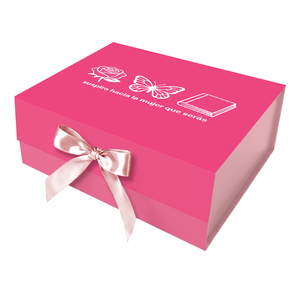
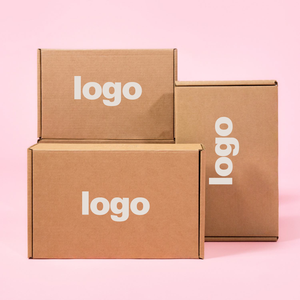
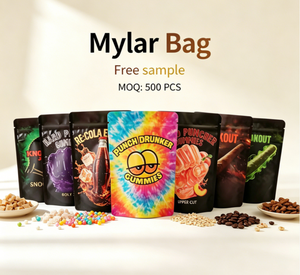
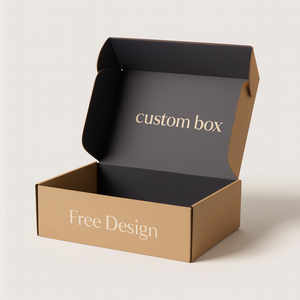
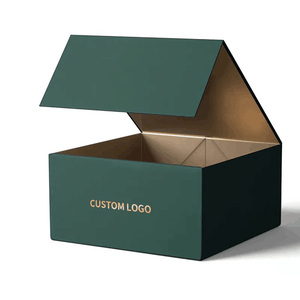
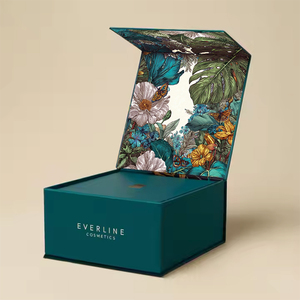
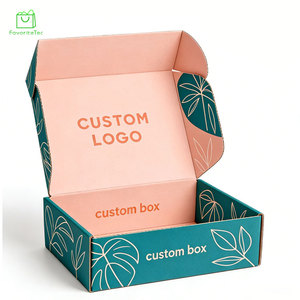
In global luxury packaging procurement, the term setup box (often referred to interchangeably as a rigid box) represents the pinnacle of structural integrity and consumer tactile perception. Unlike standard folding cartons that ship flat and require manual or automated erecting on assembly lines, setup boxes are fabricated in a three-dimensional form by wrapping heavy-duty paperboard chipboard (typically ranging from 800 GSM to 2400 GSM) with premium printed liners, specialty papers, or metallic foils.
For global procurement officers, corporate purchasing directors, and brand strategists, identifying trusted setup boxes manufacturers and OEM/ODM factories requires looking beyond basic unit cost. Evaluating a factory's technical capabilities involves assessing automated V-grooving precision, visual-positioning robotic wrapping accuracy, glue viscosity control under fluctuating environmental conditions, and structural burst-resistance metrics.
A high-performance setup box manufactured in a state-of-the-art facility relies on a multi-tier structural architecture:
Synthesizing modern structural engineering with customer-centric service models, our manufacturing operations resolve traditional packaging supply chain bottlenecks.
Eliminate initial capital expenditure hurdles. We absorb all custom cutting die and printing plate charges, enabling agile brands to launch new SKUs without prohibitive upfront tooling costs.
Our dedicated structural engineering team generates precise CAD dielines and 3D digital renderings within 24 hours, ensuring perfect fitment around your exact product dimensions.
Accelerate speed-to-market. Utilizing high-speed automated rigid box wrapping machinery and dual-lane print lines, we complete complex production runs within 7–10 days post artwork sign-off.
Experience absolute color fidelity. Our Heidelberg offset presses and digital inline spectro-densitometers ensure Delta-E variance remains below 1.5 across large-volume production runs.
Align with global ESG directives. We source 100% recyclable, FSC-certified post-consumer waste chipboard paired with eco-friendly soy-based inks and non-toxic laminates.
From boutique brand launches requiring 100 bespoke units to full enterprise container shipments, our dual production setup caters seamlessly to varying volume needs.
As global supply chains navigate carbon neutral imperatives, geopolitical shifts, and rapid e-commerce integration, the setup box manufacturing sector is experiencing structural technological evolution. Global buyers must realign their sourcing strategies around three pivotal procurement trends over the coming decade:
Historically, one of the biggest logistics barriers for setup boxes has been their volumetric air weight during transport. Traditional rigid boxes are shipped fully assembled, occupying substantial container volume. Modern setup box factories are pioneering magnetic foldable setup boxes (as showcased in Products #1, #5, and #6 above). These structures ship flat—reducing freight volume and warehousing costs by up to 75%—yet assemble instantly into a rigid luxury box via strategically positioned double-sided tape or embedded Neodymium magnet walls upon arrival.
Manual box wrapping is increasingly prone to human error, adhesive inconsistencies, and slower throughput. Top trusted manufacturers are heavily investing in robotics-assisted positioning systems. High-resolution CCD cameras capture greyboard positioning in real-time, matching face papers with alignment accuracy down to ±0.1mm. This degree of automation dramatically reduces unit costs for large volume contracts while maintaining immaculate edge alignments.
Extended Producer Responsibility (EPR) regulations in North America and Europe are penalizing multi-material unrecyclable packaging. Sourcing teams are phasing out non-recyclable plastic blisters, thermal lamination films, and poly-foam inserts in favor of 100% paper-based mono-material solutions. Micro-fluted corrugated inserts, paper-pulp trays, and water-based dispersion barrier coatings are replacing conventional plastic elements without sacrificing drop-test impact protection.
| Packaging Metric | Traditional Rigid Setup Box | Foldable Magnetic Setup Box | E-Commerce Kraft Mailer |
|---|---|---|---|
| Inbound Freight Efficiency | Low (Ships Bulk Volume) | Very High (Ships 100% Flat) | Extreme (Ships Flat) |
| Unboxing / Luxury Perception | Tier 1 (Ultra-Premium) | Tier 1 (Premium Luxury) | Tier 2 (Functional / Modern) |
| Assembly Speed at Fulfillment | Instant (0 seconds) | Fast (3-5 seconds snap) | Moderate (5-10 seconds fold) |
| Edge Crush / Compression Strength | Very High (>1500 N) | High (>1100 N) | Medium-High (ECT 32-44) |
| Primary Sourcing Industries | Jewelry, Perfume, Cosmetics | Apparel, Shoes, Electronics | D2C E-Commerce, Retail Goods |
Surface treatments and paper chemistry play a vital role in consumer engagement and brand protection. Modern setup box manufacturing integrates sophisticated tactile enhancements and protective coatings designed to withstand abrasive friction during transport.
Conventional matte films are notorious for scuffing during transit, particularly on dark or black ink layouts. Next-generation polypropylene (BOPP) anti-scratch films provide a velvet soft-touch sensory feel while resisting surface abrasions, scuffs, and fingerprint smudges across complex retail handling environments.
Digital spot UV varnishes integrated with high-precision CNC magnesium embossing dies allow manufacturers to create multi-level raised textures. By registered alignment over foil-stamped brand logos, factories impart a distinct dimensional relief that communicates craft and structural authority.
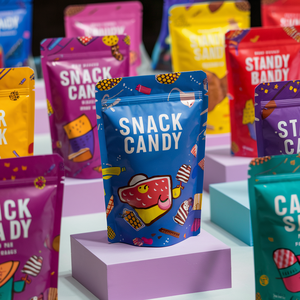
For flexible pouch lines and specialized setup inserts (as seen in Product #3 and #8), metalized PET and aluminum foil barrier layers achieve Moisture Vapor Transmission Rates (MVTR) and Oxygen Transmission Rates (OTR) approaching zero, protecting delicate food, cannabis, and cosmetic formulations from light and oxygen degradation.
Top-tier factories are embedding covert security features directly into the box matrix—including UV fluorescent ink patterns, micro-text printing, tamper-evident security seals, and integrated NFC/RFID chips—enabling enterprise brands to authenticate product origin seamlessly via smartphone scanners.
Get immediate answers to common technical, financial, and logistical questions encountered when evaluating OEM setup box manufacturers.
While large automated production lines favor orders of 1,000 to 5,000 units for optimal cost efficiency, our factory setup supports flexible runs starting as low as 100 units. Smaller short-run orders are processed on high-precision semi-automated sample cut lines, allowing emerging brands to obtain production-grade packaging without heavy financial commitment.
Setup boxes are constructed from thick, rigid chipboard (1.5mm to 3.0mm core thickness) wrapped in printed paper. They are non-collapsible in traditional forms (though foldable variants exist) and provide superior strength and luxury appeal. Folding cartons are die-cut from thin paperboard (0.3mm to 0.8mm), shipped completely flat, and erected immediately before product insertion.
Once artwork dielines are digitally proofed and structural samples confirmed, full-scale mass manufacturing typically takes 7 to 10 business days. Expedited production services (3 to 5 business days) are available for urgent product launches, subject to substrate stock availability and finishing complexity.
Yes. We provide two sampling paths: (1) Plain unprinted structural prototypes cut on CAD plotting machines to verify product dimensions and fitment, and (2) Fully printed pre-production hard samples featuring your exact spot finishes, foil stamping, and color profiles to ensure complete quality assurance prior to mass production.
We require vector-based graphic files saved in Adobe Illustrator (.AI) or press-quality PDF format. All artwork must be built directly onto our provided layer-isolated CAD dielines, with fonts converted to outlines/curves, image assets embedded at 300+ DPI, and colors assigned to CMYK or specific Pantone Spot Color (PMS) codes.
Every packaging structure undergoes rigorous ISTA-certified testing protocols, including drop testing, vibration analysis, and Mullen burst testing. Master shipping cartons are engineered from double-wall or triple-wall corrugated board with corner protectors and palletized shrink wrapping to prevent crushing during ocean or air transport.
Absoutely. Our paperboard, papers, and adhesives comply fully with FSC standards, REACH, RoHS, and US FDA food-contact regulations where applicable. We prioritize water-based non-toxic adhesives, soy-based printing inks, and plastic-free bio-laminates to support zero-waste corporate sustainability metrics.
Depending on product fragility and target aesthetics, we engineer custom interior inserts using high-density EVA foam lined with velvet, molded sugarcane bagasse pulp trays, eco-friendly folded paperboard dividers, or micro-corrugated fence partitions for glass bottles and cosmetic containers.
Partner with an established custom box manufacturer equipped to deliver precision engineering, transparent wholesale pricing, rapid global turnaround, and uncompromised structural quality.